

Deck-post cracks appear on millions of residential decks throughout the country, creating anxiety for property owners who must determine the appropriate response. Understanding the difference between benign surface checking and dangerous structural damage can save homeowners thousands of dollars in unnecessary repairs while ensuring family safety on outdoor living spaces.
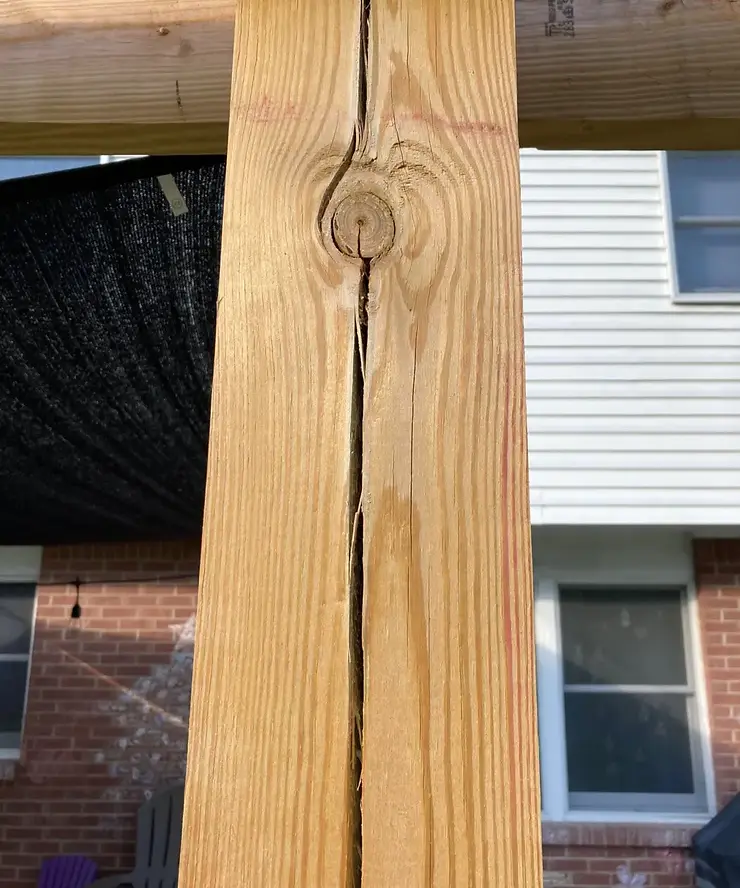
Understanding Natural Wood Movement and Checking
Deck-post cracks often result from natural wood movement that occurs as lumber adjusts to environmental conditions. Wood naturally expands and contracts in response to moisture and temperature changes, creating internal stresses that can manifest as surface cracks called checking.
Pressure-treated lumber, commonly used for deck construction, experiences particularly noticeable checking as the treatment process introduces moisture that gradually evaporates.
Cosmetic checking usually appears as shallow, narrow cracks that do not penetrate deeply into the wood structure. These surface-level fissures rarely compromise the structural integrity of deck posts, instead representing the natural aging process of exterior lumber exposed to weather elements.
Identifying Structural Red Flags in Deck Posts
Dangerous deck-post cracks exhibit characteristics that distinguish them from harmless cosmetic checking. Structural cracks typically extend deeply into the wood, sometimes penetrating completely through the post cross-section.
These fissures often appear wider than cosmetic checks and may continue growing over time as structural loads stress the compromised material.
Horizontal cracks present particular concern because they run perpendicular to the wood grain and can significantly reduce the post’s load-bearing capacity.
Environmental Factors Contributing to Crack Development
Weather patterns significantly influence deck-post cracks formation and progression. Regions experiencing extreme temperature fluctuations create conditions where wood expands and contracts repeatedly, accelerating the checking process. Similarly, areas with high humidity variations cause moisture content changes that promote crack development.
Direct sunlight exposure intensifies wood checking by rapidly drying surface fibers while interior moisture remains trapped. This uneven drying process creates differential shrinkage that manifests as surface cracks running along grain lines.
Assessment Techniques for Homeowner Evaluation
Homeowners can perform preliminary evaluations of deck-post cracks using simple assessment techniques that help determine the urgency of professional intervention. Visual inspection should focus on crack depth, width, and orientation relative to the wood grain structure.
A straightforward depth test involves inserting a thin knife blade or credit card into the crack to gauge penetration depth. Surface checking typically allows minimal insertion, while structural cracks may accept the full blade thickness or more.
When Professional Inspection Becomes Necessary
Deck-post cracks warrant professional inspection when they exhibit concerning characteristics that suggest structural compromise. Cracks wider than a quarter-inch, horizontal orientations, or evidence of continuing growth require expert assessment to determine safety implications.
Posts showing multiple crack patterns, especially when combined with other deterioration signs like rot or insect damage, need immediate professional evaluation. The interaction between different damage types can create compound structural problems that exceed simple crack assessment.
Preventive Measures and Maintenance Strategies
Regular maintenance helps minimize deck-post crack development and prevents cosmetic checking from evolving into structural problems. Annual inspections allow homeowners to identify developing issues before they compromise deck safety.
Proper drainage around deck posts reduces moisture exposure that contributes to both checking and rot development. Installing proper flashing, maintaining gutters, and ensuring adequate ground slope helps protect post integrity.


0 Comments